
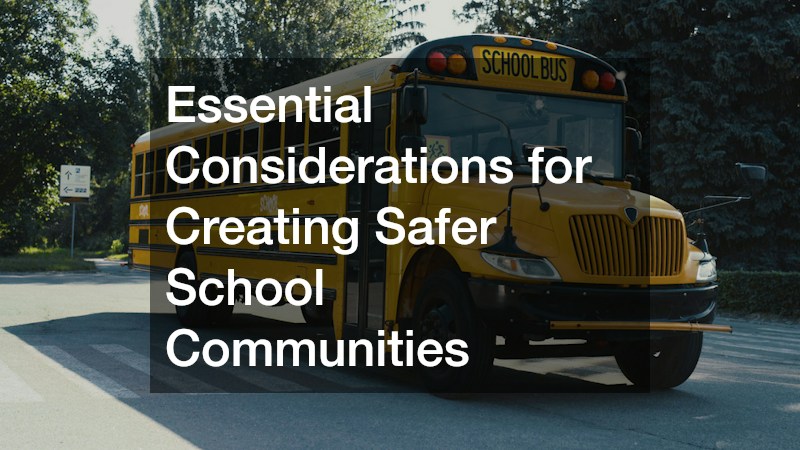
Schools have a responsibility to create environments where students can learn, participate, and move through the day with appropriate safeguards in place. Creating that environment requires more than responding to emergencies after they happen. Administrators must consider everyday activities, campus conditions, transportation, visitors, accessibility, and the many people who interact with students.
The strongest safety plans combine clear policies with consistent implementation. Staff members should understand their responsibilities, students should receive age-appropriate guidance, and families should know what to expect. By examining different aspects of school operations together, administrators can create a safer and more organized environment throughout the school community.
Establish Clear Procedures for Managing Student Visitation
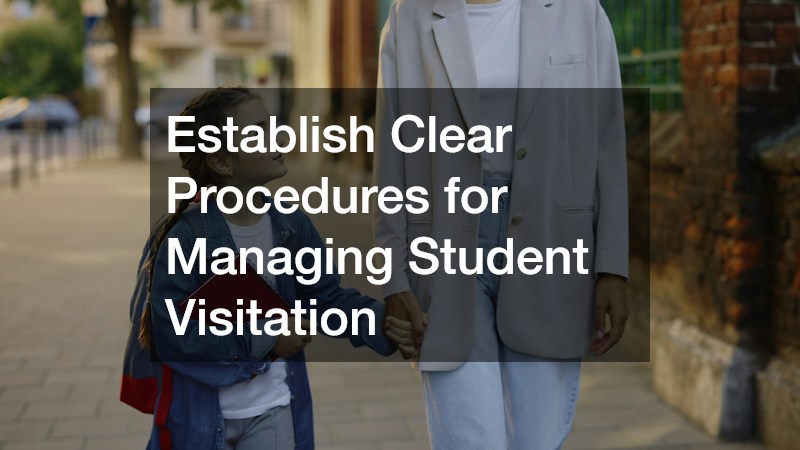
Schools regularly interact with parents, guardians, volunteers, vendors, contractors, and other visitors. Without consistent procedures, it can become difficult for staff to distinguish authorized visitors from people who should not be inside student areas. A written process should explain where visitors enter, how their identities are verified, where they may go, and when they must be accompanied.
Administrators should also account for circumstances involving family relationships or custody arrangements. Staff should follow established school policies rather than making informal decisions based on incomplete information. In situations involving disputes over access to a child, consulting a visitation lawyer may help clarify relevant legal considerations while the school maintains its own safety procedures.
Practical measures include:
- Requiring visitors to use a designated entrance and check in.
- Providing visible identification for approved visitors.
- Limiting access to classrooms and other restricted areas.
- Maintaining visitor records according to applicable requirements.
- Establishing procedures for visitors who refuse to follow school rules.
Clear expectations make visitor management more predictable for staff and families. Procedures should also be reviewed periodically to address changes in school operations.
Build Age-Appropriate Safety Practices Into Student Programs
Safety instruction should reflect the ages, abilities, and daily experiences of students. A preschool classroom, an elementary school, and a secondary campus have different supervision requirements and different ways of teaching students to recognize hazards. Incorporating safety into daily routines can make important behaviors easier for students to understand and remember.
For younger children, teachers can use simple language, demonstrations, repetition, and supervised practice. In preschool programs, safety lessons might address walking indoors, staying with an assigned adult, playground boundaries, handwashing, and what to do when an unfamiliar person approaches. Older students can receive more detailed guidance about emergency procedures, transportation, digital safety, and reporting concerning behavior.
Schools can strengthen age-appropriate instruction by:
- Practicing emergency procedures without creating unnecessary fear.
- Using visual reminders in areas where specific behaviors matter.
- Teaching students how to identify trusted adults at school.
- Adjusting lessons as students develop greater independence.
- Giving families information they can reinforce at home.
Safety education works best when it becomes part of the school routine rather than an occasional presentation. Staff should also watch for situations where a student needs additional explanation or support.
Strengthen Transportation Procedures Before Students Leave Campus
Student transportation creates several points where risks can arise, including loading zones, road crossings, vehicle movement, and behavior inside buses. Schools should establish procedures that account for what happens before students board, while vehicles are moving, and after students reach their destinations.
Loading and unloading areas deserve particular attention because buses, passenger vehicles, bicycles, and pedestrians may all occupy the same space. Schools can use designated lanes, staff supervision, signs, and physical barriers where appropriate to reduce conflicts. Drivers and staff should also have a clear process for reporting mechanical concerns, behavioral incidents, or collisions.
If an incident occurs, administrators should preserve relevant information rather than relying solely on memory. Depending on the circumstances, records may include transportation logs, witness accounts, photographs, surveillance footage, maintenance records, and other documentation. A school bus accident injury attorney may become involved when a serious collision results in injuries and questions arise about liability or available evidence.
Useful transportation practices include:
- Reviewing bus loading zones regularly.
- Keeping students away from moving vehicles.
- Documenting transportation incidents promptly.
- Maintaining current emergency contact information.
- Coordinating communication among drivers, administrators, and families.
Create a Plan for Vehicles Blocking Critical School Access
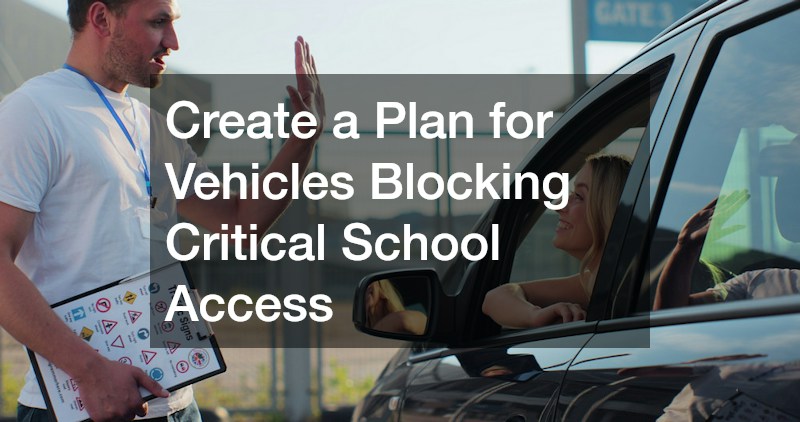
Improperly parked vehicles can create more than a minor inconvenience on a busy school campus. A vehicle positioned in a fire lane, emergency access route, bus zone, or designated pedestrian area can interfere with normal operations and potentially delay emergency response.
Schools should identify areas that must remain unobstructed and communicate those restrictions clearly. Signs, pavement markings, designated pickup areas, and consistent enforcement can reduce confusion. Administrators should also establish a procedure for situations in which a vehicle remains in a prohibited location after being asked to move.
A written process can identify who is authorized to address the issue, how the vehicle owner should be contacted, and what circumstances justify additional action. Developing relationships with tow service companies in advance can help administrators understand available procedures and avoid improvising during a busy school day.
A practical campus policy can include:
- Clearly marked no-parking and emergency access areas.
- Separate spaces for buses, deliveries, and family vehicles.
- Documentation of repeated parking problems.
- A designated staff member responsible for escalation.
- Procedures for handling vehicles that create immediate access concerns.
The goal is to make vehicle management predictable while protecting access to areas needed for students, staff, and emergency responders.
Evaluate Campus Conditions Before Beginning Major Activities
Physical conditions can change quickly when schools begin construction, renovations, landscaping projects, athletic events, or other major activities. Temporary hazards may appear even when a campus normally has well-maintained walkways, entrances, and gathering spaces. Reviewing conditions before work begins allows administrators to identify conflicts between student movement and active work areas.
Site readiness should be evaluated before students occupy an altered space. This can involve checking walking surfaces, entrances, lighting, fencing, drainage, temporary barriers, signage, and emergency routes. Construction materials and equipment should be positioned so they do not unnecessarily interfere with normal school traffic.
Before an activity or project begins, administrators can:
- Walk the affected areas with relevant staff.
- Identify temporary pedestrian routes.
- Confirm emergency access remains available.
- Separate students from equipment and active work zones.
- Document hazards that require correction.
- Assign responsibility for monitoring changing conditions.
A review should not end on the first day of a project. Conditions can change as work progresses, so schools should conduct follow-up inspections and update routes or restrictions when necessary.
Improve Background Screening and Access Controls
Schools interact with numerous adults beyond their regular instructional staff. Volunteers, coaches, substitute workers, contractors, and service providers may have different responsibilities and levels of access to students or school facilities. A consistent screening and access policy can help administrators manage those differences.
Schools should identify which positions require background checks, identity verification, or other screening under applicable laws and institutional policies. Fingerprint services may be part of a broader screening process for certain individuals, depending on their role and jurisdiction. Administrators should distinguish between screening requirements and physical access permissions, since completing a screening process does not automatically mean someone should have unrestricted access.
Strong access practices can include:
- Creating role-based access categories.
- Requiring identification for authorized adults.
- Reviewing access permissions when responsibilities change.
- Keeping screening records secure and appropriately maintained.
- Establishing procedures for temporary contractors and visitors.
Physical security should also be practical. Staff should know which doors should remain locked, how lost identification is handled, and whom to notify when an unfamiliar person is found in a restricted area. Periodic reviews can identify access permissions that are no longer appropriate.
Maintain Reliable Vehicles for School-Related Activities
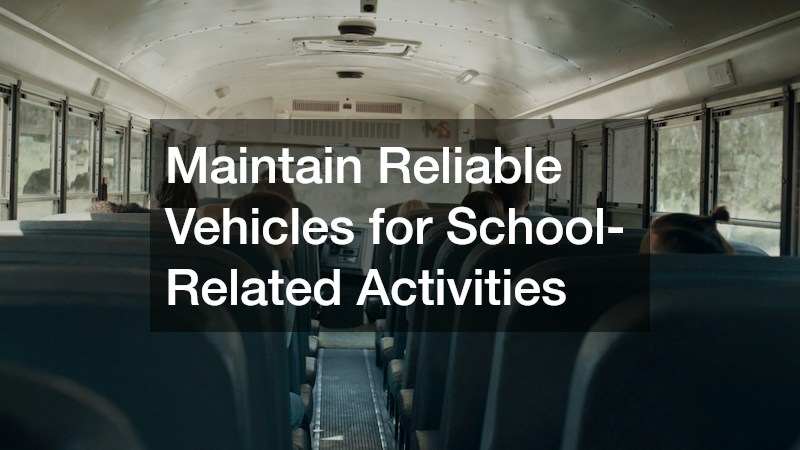
School vehicles may support maintenance, athletics, deliveries, field activities, events, and other campus operations. Because these vehicles can carry people, equipment, or materials, administrators should consider their condition and intended use when developing transportation policies.
Vehicle selection should begin with the actual demands placed on the vehicle. A vehicle used primarily to transport equipment may have different requirements from one used for passenger transportation or towing. For example, new Ford trucks may provide features that suit certain operational needs, but schools should evaluate any vehicle based on capacity, visibility, safety features, maintenance requirements, and authorized use rather than simply choosing a model.
Schools can establish a vehicle management process that includes:
- Scheduled inspections and preventive maintenance.
- Clear rules for who may operate each vehicle.
- Documentation of repairs and recurring mechanical concerns.
- Driver orientation for unfamiliar vehicle features.
- Pre-trip checks for vehicles used on school business.
Administrators should also establish a process for taking a vehicle out of service when a safety issue is identified. Keeping reliable records makes it easier to identify recurring problems and plan replacements or repairs.
Develop Transportation Rules That Reduce Traffic Risks
Traffic congestion around schools can create conflicts between pedestrians and vehicles, particularly during arrival and dismissal. Families may be focused on finding parking or reaching a particular entrance, while buses, staff vehicles, delivery drivers, and students are moving through the same general area.
Schools can reduce these conflicts by designing traffic patterns around predictable movement. Separate entrances or lanes for buses, staff, visitors, and student drop-off can help reduce unnecessary crossings. Administrators should also examine locations where drivers make illegal turns, stop unexpectedly, block intersections, or compete for limited curb space.
Useful steps include:
- Mapping traffic flows during peak arrival and dismissal periods.
- Identifying blind spots and pedestrian crossing points.
- Using signs and pavement markings consistently.
- Assigning staff to high-conflict areas when appropriate.
- Revising traffic plans after major enrollment or construction changes.
Schools can also consult traffic attorneys when persistent roadway issues involve legal questions, property access, or disputes surrounding traffic controls. The broader objective is to create a traffic plan that is understandable before drivers arrive on campus.
Make Accessibility Part of Everyday Safety Planning
School safety planning should account for the different ways students may move through buildings, communicate, process information, or respond during emergencies. A procedure that works for one student may create an unnecessary obstacle for another. Accessibility should therefore be incorporated into ordinary campus planning rather than addressed only after an emergency occurs.
Administrators should review entrances, hallways, classrooms, restrooms, evacuation routes, and gathering locations. Emergency plans should consider how students with mobility, sensory, communication, or other needs can receive instructions and move to designated areas.
Schools can strengthen accessibility planning by:
- Keeping accessible routes free of stored materials and temporary obstacles.
- Identifying appropriate evacuation assistance procedures.
- Providing emergency information in usable formats.
- Considering accessibility when rearranging classrooms or common areas.
- Training staff on individualized student needs and established procedures.
A disability legal professional can provide insight into legal considerations when schools are reviewing accommodations or accessibility concerns, although administrators should also follow their district’s established policies and applicable requirements.
Regular accessibility reviews are valuable because construction, furniture changes, and new programs can unintentionally create barriers that were not present previously.
Use School Vehicles and Facilities as Opportunities for Safety Communication
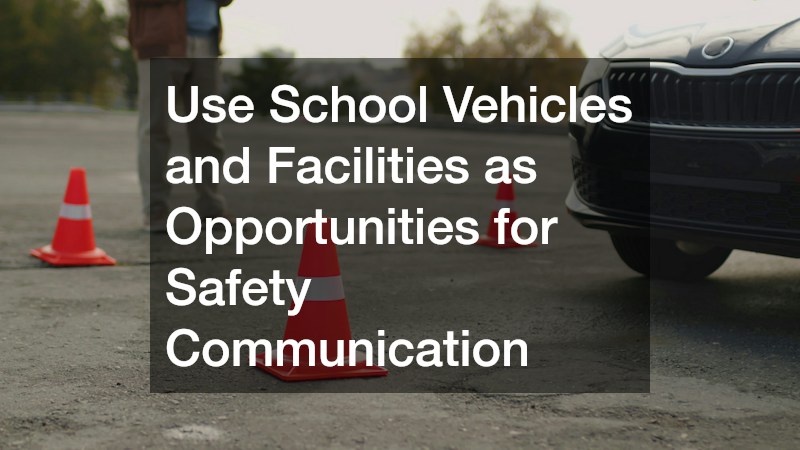
Safety information is more effective when people can recognize it quickly. School buses, maintenance vehicles, entrances, parking areas, and other visible parts of campus can provide opportunities to communicate boundaries, directions, and identification information without relying entirely on verbal instructions.
Exterior vehicle markings can help families and students distinguish authorized school vehicles from other traffic. When considering options such as vinyl wraps, administrators should focus on visibility, readability, durability, and whether the design supports rather than distracts from safe vehicle operation.
Schools can also coordinate visual communication across the campus by:
- Using consistent symbols for restricted or designated areas.
- Making directional signs visible from appropriate distances.
- Clearly identifying student pickup and drop-off locations.
- Keeping important safety messages brief and easy to understand.
- Reviewing signs and vehicle markings when campus traffic patterns change.
Visual communication should complement, not replace, staff supervision and written procedures. Signs that are damaged, obscured, outdated, or inconsistent can create confusion, so schools should periodically inspect them and update information when operations change.
Creating a safer school community requires administrators to look beyond individual emergencies and examine how everyday operations affect students, staff, families, and visitors. Visitor management, transportation, campus conditions, accessibility, screening, and vehicle policies all contribute to the overall environment in which students learn.
The most effective safety strategies are practical, consistently applied, and integrated into normal school operations. When administrators address risks proactively and communicate expectations clearly, they can build a more organized environment that supports both student safety and the educational experience.
