Explore the unique characteristics of Montessori toddler preschools and uncover how they differ from traditional educational settings. Understand the guiding principles, day-to-day activities, and the core philosophy behind these specialized learning environments.
1. What is the Philosophy Behind Montessori Toddler Preschools?
Montessori toddler preschools are grounded in the educational philosophy developed by Dr. Maria Montessori, emphasizing self-directed, experiential learning in a thoughtfully prepared environment.
This approach believes in respecting a child’s natural psychological, physical, and social development. The classrooms are designed to offer choice and freedom within limits, encouraging children to learn at their own pace while fostering independence. This philosophy is rooted in the understanding that each child is unique and possesses intrinsic potential that can be developed through appropriate guidance and support. The focus on self-directed learning cultivates a sense of responsibility and ownership over the learning process.
Emphasizing sensory-based and hands-on learning, the Montessori method allows toddlers to explore materials that align with their interests and developmental stages. Teachers, often referred to as guides, facilitate an environment where curiosity and discovery are central to learning. By observing children closely, teachers provide individualized lesson plans and adapt activities to meet each child’s needs. The curriculum is not rigid but rather flexible and evolves with the child’s growing interests and capabilities. This child-centered approach nurtures creativity and critical thinking from an early age.
The Montessori philosophy also strongly values the concept of intrinsic motivation. By allowing children to choose their activities, the learning experience becomes more engaging and meaningful. This autonomy fosters motivation that comes from within, rather than relying on external rewards or praise. The Montessori approach encourages collaboration and socialization, teaching children to respect and care for themselves, others, and their environment. This holistic view considers the child’s emotional, cognitive, social, and physical development.
2. How Do Montessori Toddler Classrooms Differ from Traditional Classrooms?
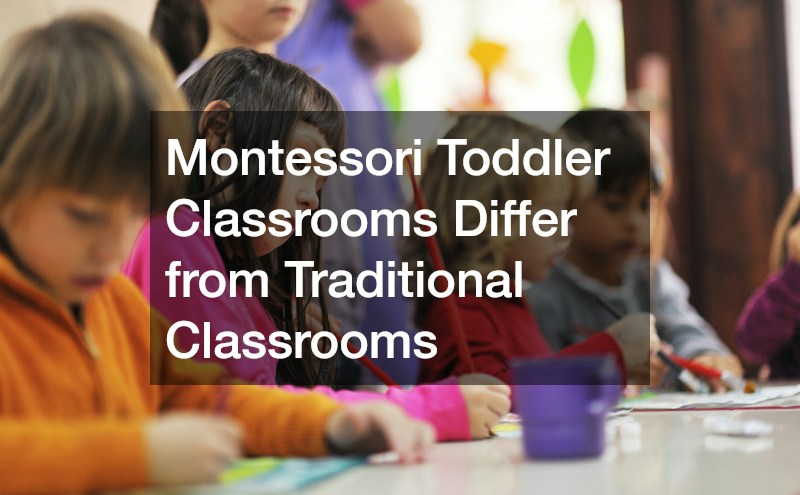
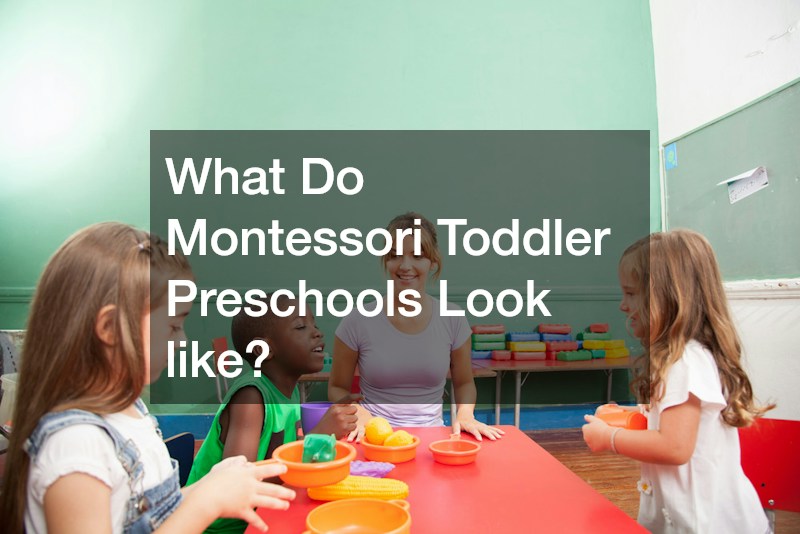
Montessori toddler classrooms are distinct from traditional preschool settings in their layout, materials, and approach to teaching. The classroom is a meticulously prepared environment, designed to meet the needs of toddlers through scaled-down furniture and easy-to-reach materials. Natural lighting, soft colors, and uncluttered spaces create an inviting atmosphere that supports concentration and exploration. Unlike traditional classrooms where teachers direct the learning, Montessori classrooms place the child at the center, with the teacher acting as a facilitator. This environment fosters an independent and self-motivated approach to learning.
The materials used in Montessori classrooms are scientifically designed to support independent learning and exploration. Unlike traditional toys, Montessori materials aim to develop specific skills and concepts, such as fine motor skills, cognitive abilities, sensory perceptions, and logical thinking. These materials are arranged sequentially to guide children from simple to complex tasks, encouraging a gradual and natural progression of skills. The multi-age classroom setting allows older children to model behavior and assist younger peers, creating a community atmosphere. This mixed-age dynamic also supports individualized learning, with children exploring subjects at their own pace.
In a Montessori toddler classroom, the emphasis is placed on process rather than product, reducing competition and stress. Children are encouraged to take their time and engage deeply with materials, promoting a mastery-oriented mindset over performance. Teachers observe and identify the interests and developmental needs of each child, providing lessons and interventions accordingly. This contrast with traditional education, which often follows a standardized curriculum and assessment practices. The Montessori method values connectedness and emotional well-being, integrating social-emotional learning as an important aspect of education.
3. What is a Typical Day Like in a Montessori Toddler Preschool?
A typical day in a Montessori toddler preschool begins with a calming routine designed to ease children’s transitions from home to school. Upon arrival, children participate in activities that range from practical life exercises, such as pouring water and dressing, to sensory play and language development. These activities help to start the day with focus and intention, instilling a sense of responsibility and independence right from the start. The Montessori method incorporates a significant amount of unstructured playtime, allowing children to explore the environment and engage in spontaneous activity. This element of the curriculum fosters creativity and problem-solving.
The work cycle is a core component of the Montessori day, enabling children to choose activities and work individually or in small groups without interruption for extended periods. This time respects each child’s natural learning rhythm and concentration span, rather than adhering to a strict schedule. As the morning progresses, children have snack times that encourage autonomy and social interaction by allowing them to serve themselves and clean up. Outdoor time is usually incorporated into the daily routine, providing opportunities for physical development and nature exploration. Snack times and outdoor play are essential for holistic development.
Afternoons in Montessori toddler preschools often include rest or nap times that cater to the developmental needs of young children. After the rest period, children may return to individualized work or participate in group activities such as music, movement, or storytelling. Regularly, the end of the day will involve group gathering or circle time, where children reflect on their activities and share experiences. This time helps in developing listening skills, interpersonal relationships, and community bonds. The consistent routine provides a sense of security and predictability, essential aspects of a nurturing educational environment.
4. How Do Montessori Toddler Preschools Support Child Development?
Montessori toddler preschools are uniquely positioned to support diverse aspects of child development, encompassing cognitive, emotional, social, and physical domains. The self-directed learning model reinforces cognitive development by promoting curiosity, focus, and analytical skills through hands-on engagement. Activities tailored to individual learning paces help in cementing foundational knowledge and understanding. Cognitive growth is further encouraged through problem-solving tasks and exploratory learning, making education a dynamic and enjoyable experience. The emphasis on understanding concepts rather than rote memorization nurtures lifelong learning skills.
Social development in Montessori settings is enhanced through collaborative tasks and lessons that foster empathy, cooperation, and respect for others. The multi-age classroom design allows toddlers to interact with peers of varying ages, encouraging role modeling and mentoring. This social framework supports the development of communication skills and emotional intelligence. Children learn to navigate complex social dynamics, engage in conflict resolution, and appreciate diversity. As a result, Montessori preschoolers develop into confident and socially adept individuals.
Emotionally, Montessori preschools prioritize autonomy and encouragement, reinforcing positive self-esteem and self-awareness. Children are acknowledged as capable individuals and are given the tools to develop self-regulation and resilience. Through mindful observation, educators provide a supportive environment where children can express feelings and learn coping mechanisms. The nurturing approach cultivates a secure sense of identity and emotional well-being, critical elements for healthy development. The holistic nature of Montessori education empowers children to grow into well-rounded and adaptive individuals.
5. What Are the Benefits and Challenges of Montessori Toddler Preschools?
Montessori toddler preschools provide numerous benefits, including fostering independence, nurturing a lifelong passion for learning, and supporting holistic growth. The individualized approach allows children to reach their highest potential, respecting each child’s unique journey. Montessori education emphasizes critical thinking, creativity, and adaptability, skills that are highly valuable in an ever-changing world. By instilling a strong sense of self and community involvement, children emerge as thoughtful and conscientious members of society. The method promotes a deep-seated love for learning, instilled from an early age.
However, there are challenges associated with Montessori toddler preschools, notably the need for a specific type of teacher training and the expense of providing a Montessori education. Educators require specialized preparation to act as effective guides, facilitating learning in a unique classroom environment. This training can be rigorous and time-consuming. Furthermore, the cost of Montessori materials and maintaining small class sizes contributes to potentially higher tuition costs, presenting accessibility challenges for some families. Despite these obstacles, many schools strive to implement Montessori principles, recognizing their transformative impact.
Another challenge lies in transitioning children from Montessori settings to traditional schools, as the methods of instruction and assessment differ significantly. Children accustomed to self-directed learning might initially find structured curricula and standardized testing systems challenging. Schools and parents can mitigate this by offering transitional support and encouraging adaptability. Understanding the Montessori method and its principles can bridge the gap, ensuring continuity in a child’s educational experience. Despite challenges, the advantages of fostering independent, curious, and capable individuals often outweigh the difficulties associated with the Montessori approach.
Montessori toddler preschools provide a nurturing, individualized approach to early childhood education, fostering holistic development in young children. Reflect on the distinctive learning environment they offer and consider their impact on childhood development and education. The Montessori method’s emphasis on autonomy, respect, and self-motivation creates empowered learners with a passion for discovery that extends beyond the classroom. By understanding the principles and practices that define Montessori education, parents and educators can better support and encourage children’s development in these critical early years. The positive outcomes of a Montessori education underscore its value in early childhood development.